Home >> Industries
The evolution of CNC (Computer Numerical Control) technology reflects the broader advancement of automation, digital control, and precision manufacturing over the past century. CNC didn’t roll out of bed in 2025 ready to dominate. It’s got old-school roots — we’re talking mid-20th-century military tech meets hole-punch tape and analog dials. But over the decades, CNC transformed from a glorified calculator to the ultra-precise, robot-integrated beast it is today. it is today.
1. Manual Machining Era (Pre-1940s)
Before CNC, machining was entirely manual. Skilled machinists operated lathes, mills, and grinders using handwheels, levers, and visual measurement. This limited complexity, consistency, and scalability.
2. Numerical Control (NC) – 1940s–1950s
The punch-tape pioneer era: Early numerical control (NC) machines used punched tape to tell machines what to do. It worked … sort of. Precision was clunky, but for post-WWII aviation, it was still miles better than manual setups. Just imagine how far it’s come.The first major leap came during World War II, when the U.S. Air Force commissioned the development of Numerical Control (NC) machines to produce complex aircraft parts. These machines were controlled by punch cards or paper tape—containing coordinate instructions—to automate tool paths.
3. CNC Emerges – 1960s
With the integration of digital computers in the 1960s, NC evolved into CNC. This shift eliminated the need for physical tapes and enabled more dynamic programming. Early CNC systems used basic programming languages and analog electronics, significantly improving repeatability and accuracy. Enter the “C” in Computer Numerical Control. Engineers began replacing tape decks with real-time computer processing. This shift gave birth to the first legit CNC systems — much faster, way more accurate, and programmable without scissors and tape splices. In the ’60s, this shift also meant G-code started to become standardized.
4. CAD/CAM Integration – 1970s–1980s
The introduction of CAD (Computer-Aided Design) and CAM (Computer-Aided Manufacturing) allowed engineers to design parts digitally and generate machine code automatically. CNC machines became more accessible and flexible across industries. With CAD and CAM software hitting the scene, manufacturers could now design and generate toolpaths digitally. G-code became the universal language of machine tools. Suddenly, CNC was both efficient and scalable.
5. Multi-Axis and High-Speed Machining – 1990s
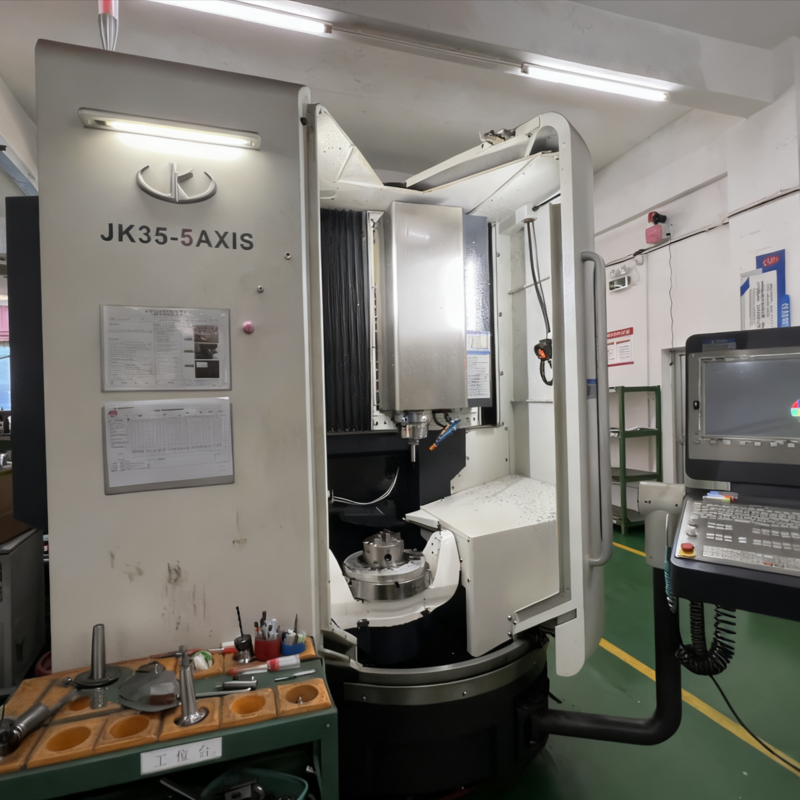
This era brought about 3-axis, 4-axis, and 5-axis machines, enabling more complex geometries and tighter tolerances. High-speed machining (HSM) and better spindle technology improved cycle times and surface finishes.
6. Smart CNC – 2000s–2010s
Advancements in microprocessors, sensors, and networking gave rise to smart CNC systems. Machines became capable of real-time monitoring, adaptive control, and remote diagnostics. CAM software became more intuitive, reducing the skill barrier.
7. Industry 4.0 and Beyond – 2015–Today
Today’s CNC machines are part of the Industry 4.0 ecosystem. They are integrated with IoT, AI, cloud-based data analytics, and digital twins, enabling predictive maintenance, lights-out manufacturing, and closed-loop quality control. Now, CNC systems ar e loaded with sensors, linked to real-time analytics, and increasingly paired with robotic arms. Smart factories can tweak production in real time — and machine learning is starting to predict wear and optimize tool paths as things happen, instead of, “Oh, no, why did this break?”
8. Future Trends in CNC Machining and Automation
CNC machining is undergoing a significant transformation as Industry 4.0 continues to reshape advanced manufacturing. Once seen as the pinnacle of precision, CNC machines are now becoming smarter, more autonomous, and deeply integrated into digital ecosystems. The future lies in AI-powered adaptive machining, where real-time data on tool wear, spindle load, and vibration allows machines to adjust cutting parameters on the fly—enhancing tool life and product consistency. Automation is accelerating with robotic arms and collaborative robots (cobots) enabling lights-out manufacturing and safer, more efficient human-machine collaboration. Closed-loop control systems, equipped with sensors and encoders, now correct deviations in real time, ensuring higher accuracy and less waste. Digital twin technology allows manufacturers to simulate machining operations virtually before production begins, reducing setup time and avoiding costly trial runs. At the same time, sustainability is gaining ground through innovations like coolant recycling, dry machining, and efficient material nesting. Finally, cloud-based smart monitoring systems are turning CNC machines into fully connected assets—providing predictive maintenance, live performance dashboards, and actionable insights that improve uptime, traceability, and operational efficiency. The result is a new era of CNC machining: faster, greener, smarter, and more agile.
Previous: None