Mar. 23, 2026
What Black Anodized Aluminum Actually Is (And Why It Directly Impacts Your Product Reliability)
Most explanations stop at:
“Electrochemical process. Oxide layer. Dyed black.”
That’s technically correct.
But if that’s all your supplier understands, you’re already at risk.
Because in real engineering terms, black anodized aluminum is not a finish—it’s a functional surface layer that determines how your part behaves in the field.
What actually happens is this:
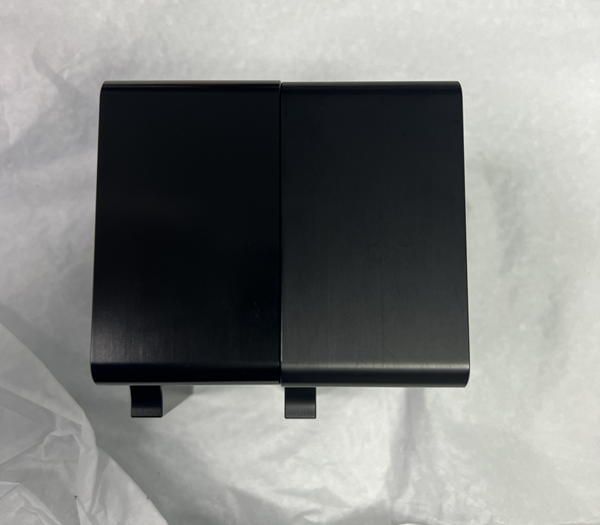
Black anodizing transforms the aluminum surface into a controlled, ceramic-like aluminum oxide layer (Al₂O₃) that is:
Mechanically bonded to the base material (not applied, not peelable)
Microporous before sealing (which defines dye absorption and consistency)
Dimensionally predictable (but only if the process is controlled)
Electrically insulating (critical for certain assemblies, problematic for others)
Thermally emissive (directly affecting heat dissipation behavior)
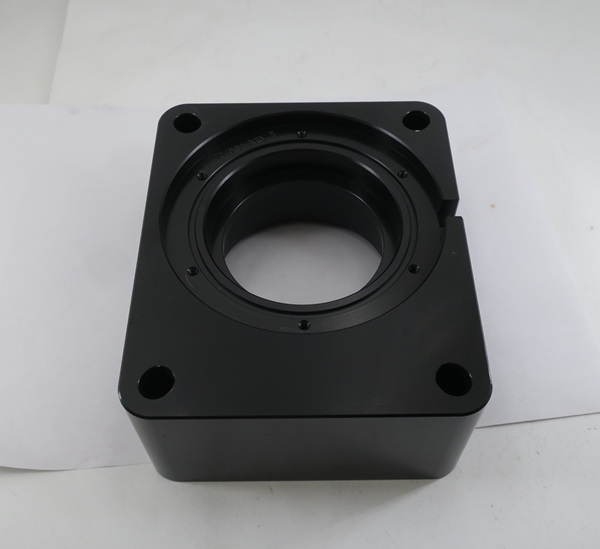
That oxide layer is not sitting on the part.
It is part of the part.
And here’s why that matters more than most teams realize:
If that layer is inconsistent, too thin, poorly sealed, or improperly formed, you don’t just get a “bad finish.”
You get:
premature wear in moving assemblies
unstable thermal behavior in electronics
inconsistent optical performance in vision systems
corrosion pathways that show up months later—not immediately
In other words:
What Black Anodized Aluminum Actually Is (Beyond the Textbook)
Most explanations stop at:
“Electrochemical process, oxide layer, dyed black.”
That’s technically correct—but incomplete.
What matters in real engineering terms is this:
Black anodizing converts the aluminum surface into a controlled ceramic-like oxide layer (Al₂O₃) that is:
Mechanically bonded (not applied)
Microporous (before sealing)
Dimensionally predictable
Electrically insulating
Thermally emissive
That oxide layer is not sitting on the part—it is part of the part.
That single fact explains almost every performance advantage.
The Real Reason Engineers Specify Black (Not Just “Anodized”)
Clear anodizing protects.
Black anodizing performs.
The difference is not cosmetic—it’s functional.
1. Heat Is the First Reason (Not Appearance)
Black surfaces have higher emissivity.
In practical terms:
They radiate heat faster
They stabilize thermal gradients
They reduce localized hotspots
That’s why black anodized aluminum shows up in:
Robotics motor housings
Laser assemblies
Medical imaging systems
In optical and photonics applications, this is not optional—it’s system stability control.
2. Light Control in Optical Systems
In machine vision or laser systems, reflected light = noise.
Black anodized surfaces:
Absorb stray light
Reduce internal reflections
Improve signal clarity
This is why optical mounts are almost always black anodized—not painted.
Paint flakes. Anodizing doesn’t.
3. Wear Without Thickness Penalty
Powder coating adds thickness.
Plating adds variability.
Anodizing grows approximately:
50% into the material
50% outward
Total impact: ~0.001” typical
This makes it uniquely suited for:
Sliding fits
Bearing interfaces
Precision assemblies
You get wear resistance without destroying tolerance stack-up.
4. Corrosion Protection That Doesn’t Fail Suddenly
Coatings fail catastrophically.
Anodizing degrades gradually.
Because the oxide layer is integral, corrosion doesn’t propagate under the surface like paint or plating.
For:
Medical cleaning cycles
Outdoor automation systems
Chemical exposure environments
This difference directly impacts service life.
5. Vacuum & Cleanroom Compatibility
Properly sealed black anodized aluminum:
Does not outgas
Maintains surface stability
Does not contaminate sensitive environments
This is why it’s used in:
Semiconductor tools
Space hardware
High-end medical systems
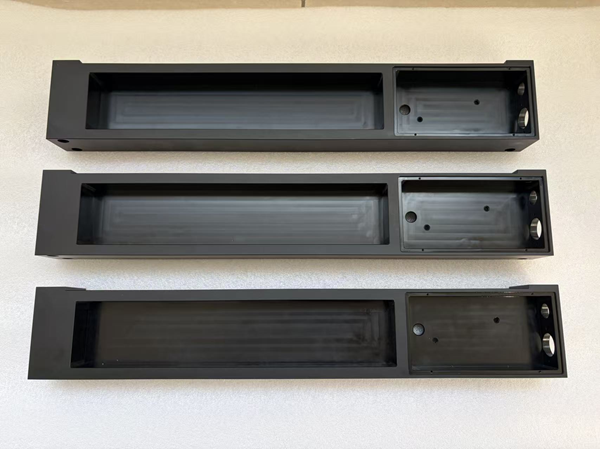
Where Most Engineers Get It Wrong
This is where most articles stop—and where real problems begin.
Mistake 1: “Black is black”
It’s not.
Black anodizing color depends on:
Dye chemistry
Bath stability
Process control
Organic dyes → cheaper, fade faster
Inorganic / electrolytic → stable, more expensive
If your product sits under UV or heat, this decision matters.
Mistake 2: Ignoring Alloy Behavior
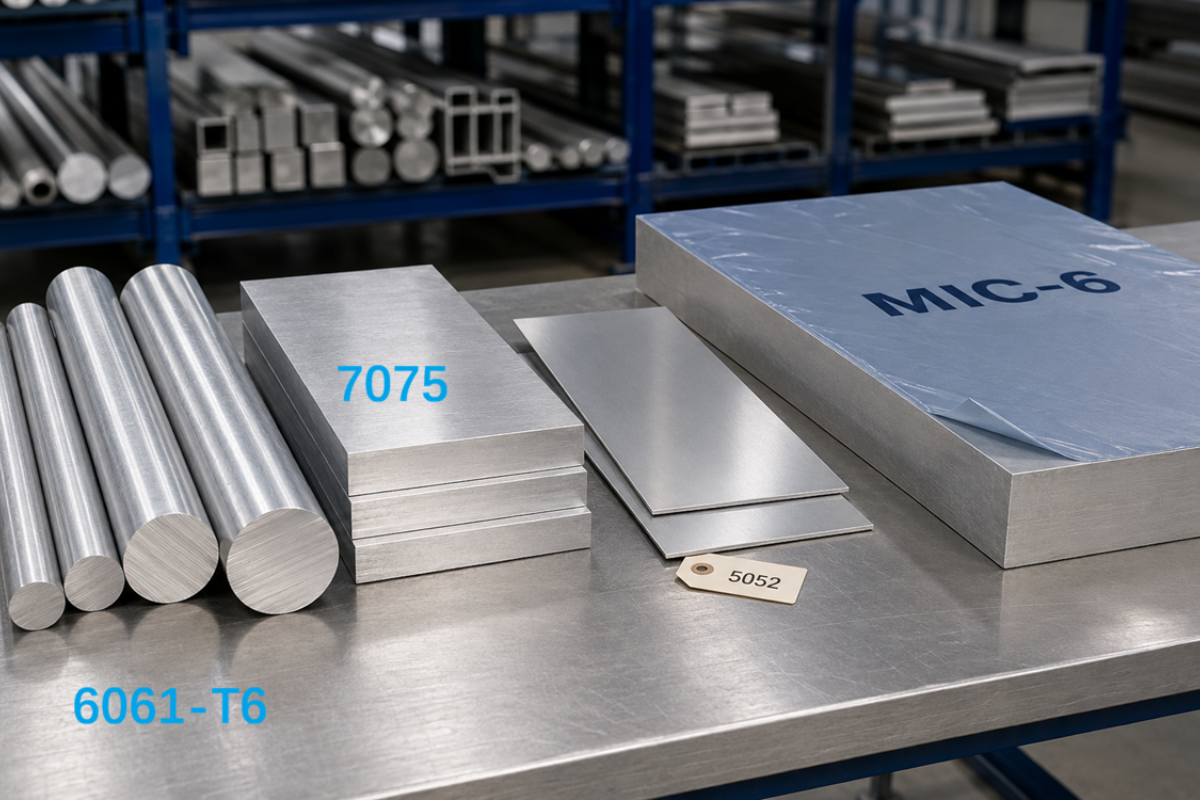
Not all aluminum anodizes equally.
6061 → consistent, predictable
7075 → strong, but color variation
High copper alloys → poor results
And yes—this is why two suppliers can give you “black anodized parts” that look completely different.
Mistake 3: Not Designing for Anodizing
Anodizing is not post-processing.
It’s part of design.
Common issues:
Sharp edges → current concentration → burn marks
Blind holes → uneven coating
Contact points → uncoated areas
These are not process defects.
They are design oversights.
Mistake 4: Treating It Like a Cosmetic Finish
If you choose anodizing for “appearance,” you will choose the wrong spec.
If you choose it for:
thermal control
friction behavior
optical performance
You will design correctly.
Process Reality: What Actually Determines Quality
The textbook process is simple:
Clean
Etch
Anodize
Dye
Seal
But in production, the real variables are:
Current density control
Bath temperature stability
Acid concentration
Time consistency
Sealing method
These determine:
Coating thickness
Hardness
Color uniformity
Long-term durability
Which is why anodizing quality varies massively between suppliers—even if they claim “same spec.”
When Black Anodizing Is NOT the Right Choice
This is important—and builds trust with serious buyers.
Black anodizing is not ideal when:
Ultra-tight press fits (<5 µm tolerance)
Even small growth can interfere.
High-impact fatigue environments
Thick anodic layers can reduce fatigue life.
Severe thermal cycling
Micro-cracking may occur due to expansion mismatch
Electrical conductivity required
The oxide layer is insulating.
Advanced Variants (Where High-End Applications Go)
For demanding systems, standard anodizing isn’t enough.
PTFE-Impregnated Anodizing
Lower friction
Improved wear
Used in moving assemblies
Hard Anodizing (Type III)
25–150 µm thickness
High hardness
Used in aerospace and industrial systems
What OEM Buyers Actually Evaluate (But Rarely Say Out Loud)
From real RFQs, what matters is not:
“Can you anodize?”
It’s:
Can you hold tolerance after anodizing?
Can you match black across multiple batches?
Can you control finish on complex geometries?
Can you deliver consistently—not just once?
This is where suppliers are separated.
Why Rollyu Precision Fits This Type of Work
We’re not positioned as a “finishing vendor.”
We are a manufacturing + finishing system.
That means:
Machining tolerances are adjusted for anodizing from the start
Surface prep is controlled, not outsourced
Anodizing parameters are consistent across batches
Inspection includes coating thickness + dimensional validation
So when parts arrive, they are not:
cosmetically correct
but dimensionally wrong
They are production-ready.
Final Thought (What This Really Comes Down To)
Black anodized aluminum is often introduced as a surface treatment.
But in real engineering, it’s something else entirely:
It’s a multi-function layer that simultaneously controls:
corrosion
wear
heat
light
appearance
Few processes do all five.
That’s why it keeps showing up in high-performance systems.
Not because it looks good.
Because it solves problems before they happen.
If You’re Working on a New Project
If your application involves:
Robotics assemblies
Medical devices
Automation systems
Optical or thermal-sensitive components
We can help you define:
Correct anodizing type
Thickness strategy
Alloy selection
Manufacturability improvements
Send drawings or RFQ
Engineering feedback within 24 hours