Home >> Products >> Aluminum Machining Parts
Large Aluminum Machined Parts for Motion Control Systems
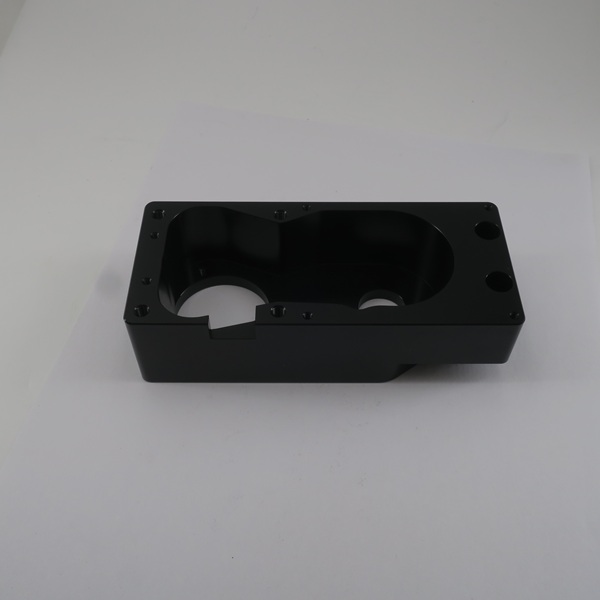
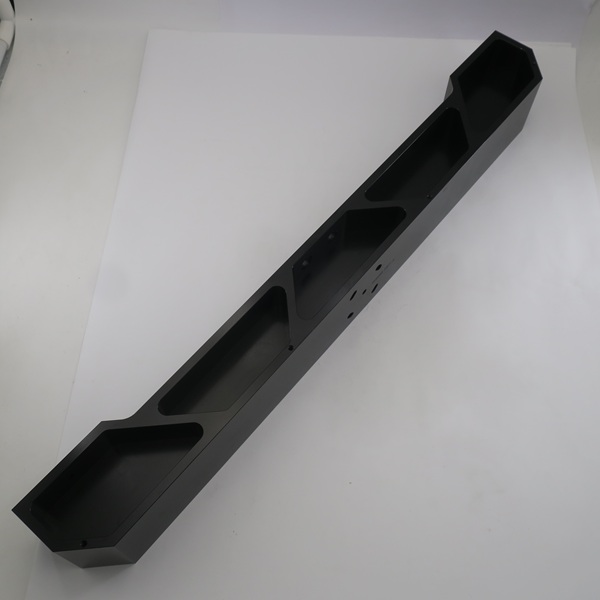
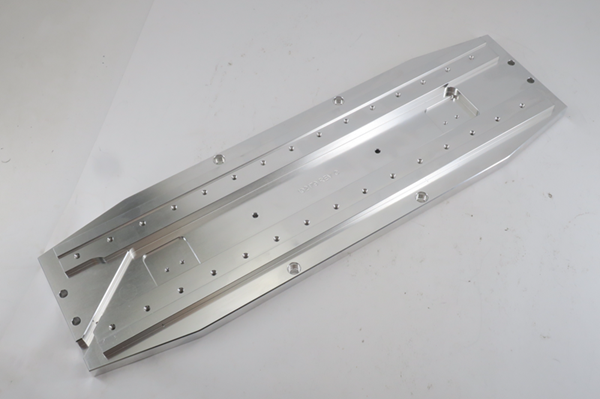
Large aluminum machined parts play a critical role in motion control systems, where structural stability directly impacts positioning accuracy, alignment, and long-term performance.
At Rollyu Precision, we manufacture high-precision aluminum components designed for demanding motion control applications, including base plates, linear stage platforms, gantry structures, and machine frames.
Unlike standard machining suppliers, we focus not only on dimensional accuracy, but on system-level performance factors such as flatness, deformation control, and thermal stability.
High Flatness Control: Achieve flatness ≤ 0.02 mm for large surfaces
Tight Tolerances: Precision up to ±0.01 mm
Deformation Management: Controlled machining strategies to minimize internal stress release
Optimized Fixturing: Stable setups for large and complex geometries
Thermal Stability: Process control to reduce temperature-induced variation
Motion control base plates
Linear guide rail mounting structures
Automation equipment frames
Precision gantry systems
Optical and positioning platforms
We commonly work with:
6061-T6 Aluminum – best balance of strength, stability, and machinability
7075-T6 Aluminum – high-strength applications
5052 Aluminum – corrosion-resistant environments
Products Details
Large Aluminum Machined Parts for Robotics & Automation
Engineered for Flatness, Stability, and System-Level Accuracy
Why Most Motion Systems Fail (Before They Even Run)
In robotics and motion control systems, failures rarely come from motors or software.
They come from something much more fundamental:
large aluminum structural components that don’t meet real-world conditions
Here’s what we consistently see when customers switch to us:
Base plate flatness out of spec → linear rails cannot align
Internal stress release → parts warp after machining
Poor fixturing → parallelism becomes inconsistent
Thermal instability → positioning drift over time
These issues don’t show up in CAD.
They show up during assembly, calibration, or operation.
And by then, they are expensive to fix.
We Don’t Just Machine Parts — We Protect System Performance
We manufacture large aluminum components that directly determine system accuracy, including:
Robot base plates
Linear motion platforms
Gantry beams
Optical mounting structures
Automation equipment frames
These are not cosmetic parts.
These are alignment-critical, performance-critical components
What “High Precision” Actually Means (With Numbers)
Most suppliers say “tight tolerance.”
Very few define it.
Our Capability for Large Aluminum Parts:
Max size: 1500 × 800 × 500 mm
Flatness: ≤ 0.02 mm
Tolerance: ±0.01 mm
Surface finish: Ra 0.8 – 3.2
How We Achieve This:
Stress-relief machining strategy
Roughing → stabilization → finishing sequencing
Dedicated fixturing for large geometries
Thermal-controlled machining environment
Inspection:
Full CMM verification
Flatness & parallelism reports
Material traceability
This is how we prevent problems before they reach your assembly line
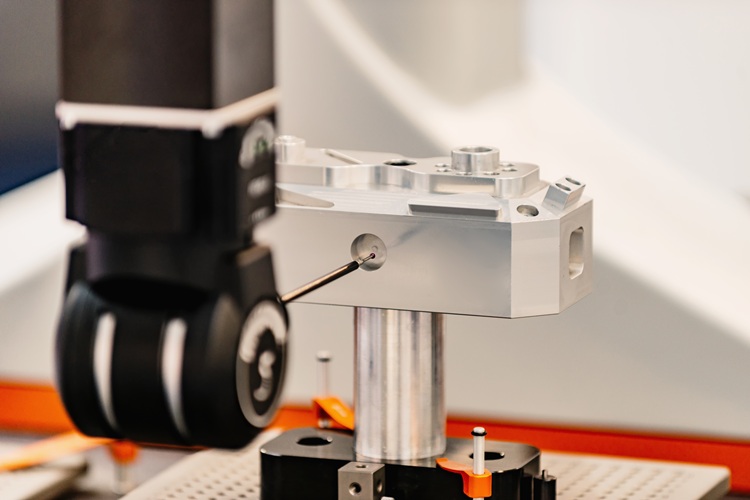
Case Study: Fixing Flatness Failure in a Robotics System
Customer Situation:
Flatness deviation: 0.08 mm
Linear rails could not be installed correctly
Assembly delays and rework costs
Root Cause:
Internal stress released during machining
uncontrolled material removal
What We Changed:
Introduced pre-machining stress relief
Optimized toolpath and cutting sequence
Applied staged machining process
Result:
✔ Flatness improved to ≤ 0.015 mm
✔ Assembly success rate increased to 100%
✔ Eliminated rework risk
Case Study: Eliminating Vibration in a Gantry System
Problem:
System instability at high speed
Cause:
insufficient structural rigidity
poor material removal strategy
Solution:
added internal rib reinforcement
optimized machining sequence
Result:
✔ Vibration reduced by ~30%
✔ Improved positioning repeatability
Why Aluminum Is Used in Precision Motion Systems
Aluminum is not chosen because it’s easy to machine.
It is chosen because it behaves predictably under real operating conditions:
High strength-to-weight ratio → faster, more responsive systems
Uniform thermal expansion → stable alignment over time
Excellent machinability → large surfaces remain controllable
Natural damping → reduced vibration
This is why aluminum is the standard for:
robotics
motion platforms
automation equipment
Engineering Problems We Solve (That Most Suppliers Ignore)
1. Deformation After Machining
Large parts release internal stress when material is removed.
✔ We control this with staged machining and stress management
2. Flatness & Parallelism
Critical for:
linear rails
bearing systems
✔ Achieved through process control + inspection
3. Thermal Behavior
Large aluminum parts expand with temperature changes.
✔ Managed through machining strategy and material selection
4. Fixturing Stability
Large geometries require specialized setups.
✔ We use dedicated fixturing systems for stability
Material Selection (Based on Real Applications)
Alloy | Application |
6061-T6 | Best for large structural parts (stable, versatile) |
7075-T6 | High-load applications (higher strength) |
5052 | Corrosion-resistant environments |
For most large precision components: 6061-T6 is the optimal choice
Surface Treatment (Performance, Not Appearance)
Anodizing → corrosion protection + durability
Black Anodize Type II
Hex Free Clear Chemfilm
Hard anodizing → wear resistance
Bead blasting → consistent surface quality
BK01, black powder coat with lighttexture.
Double disk grinding
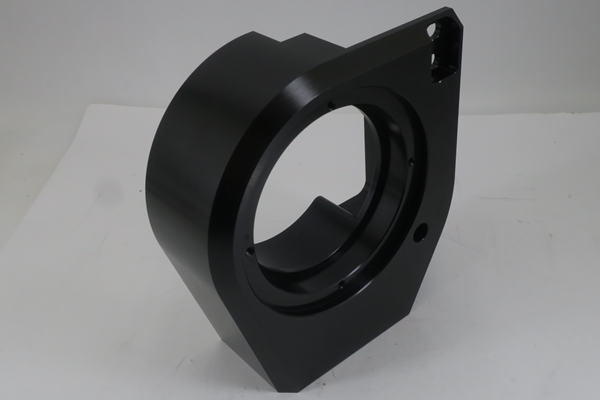
Surface condition directly affects:
friction behavior
wear resistance
assembly fit
Design Guidelines (Reduce Risk Before Machining)
If you are designing large aluminum components:
Avoid large unsupported thin walls
Add ribs to increase stiffness
Apply tight tolerances only where necessary
Consider machining sequence during design
Good design doesn’t just reduce cost It prevents downstream failure
Why Large Aluminum Parts Fail (In Real Projects)
From actual production experience:
Flatness not controlled
No stress-relief process
Improper fixturing
Thermal expansion ignored
Most failures are not design flaws
They are manufacturing execution failures
Why Engineers Choose Us
We are not a quoting platform.
We are a manufacturing partner focused on system-critical components
What you get:
Engineering feedback before production
DFM optimization suggestions
Consistent quality across batches
Reliable delivery you can plan around
Request a Quote — Reduce Risk Before You Machine
If you are working on:
robotics systems
automation equipment
motion control platforms
The fastest way to evaluate us:
Send your drawing (STEP / PDF)
We will provide:
DFM feedback
tolerance risk analysis
machining strategy
quotation within 24–48 hours