Jan. 11, 2026
Photonics CNC Machining
Stability-Driven Manufacturing for Optical Systems That Must Hold Alignment
In photonics systems, passing inspection is not enough.
Many optical assemblies drift not because CNC parts are out of tolerance,
but because system behavior was never engineered at the manufacturing stage.
At Rollyu Precision, we machine photonics hardware that stays stable after assembly, thermal cycling, and time—not just parts that look good on a CMM report.
Why Photonics Machining Is Different
Photonics machining is not conventional precision machining.
Optical performance depends on:
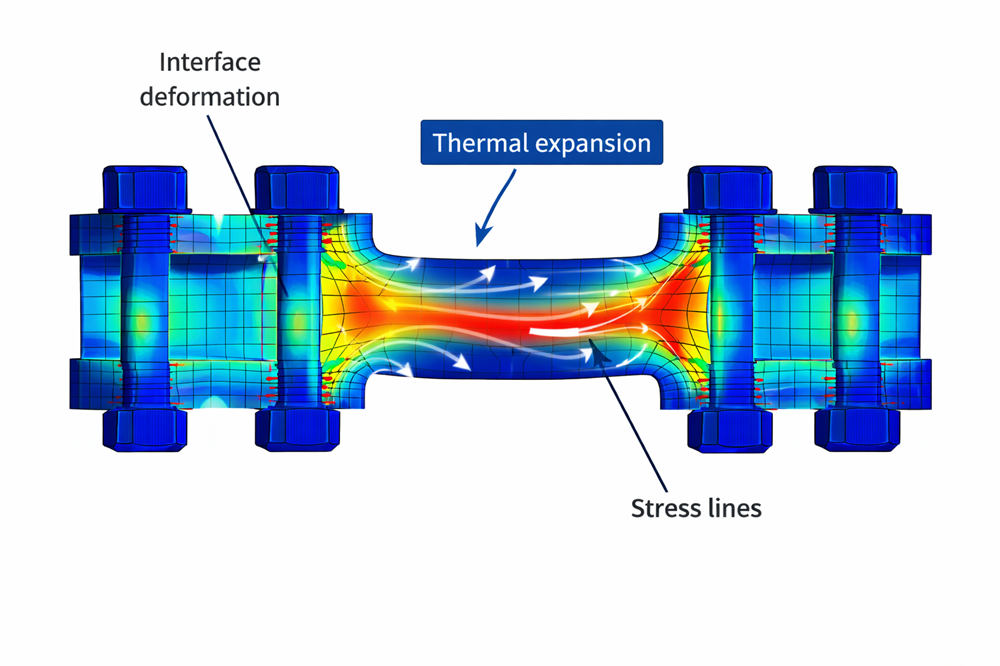
Interface behavior
Assembly preload
Residual stress
Thermal-mechanical interaction
These factors are invisible to dimensional inspection, yet they determine whether a system holds alignment or drifts in the field.
That is why CNC machining for photonics must be approached as a system-stability problem, not a tolerance-only exercise.
What We Actually Engineer (Beyond Tolerances)
1. Interface Stability, Not Just Geometry
We pay close attention to:
Mating surfaces
Contact stiffness
Surface finish at load-bearing interfaces
Because in photonics assemblies, interfaces—not features—control alignment over time.
2. Stress-Controlled Machining
Residual stress is one of the most common causes of post-inspection drift.
Our process includes:
Multi-stage roughing and finishing
Stress relief between machining stages
Low-pressure finishing passes
The goal is simple:
the geometry you measure is the geometry you keep.
3. Assembly-Aware Manufacturing
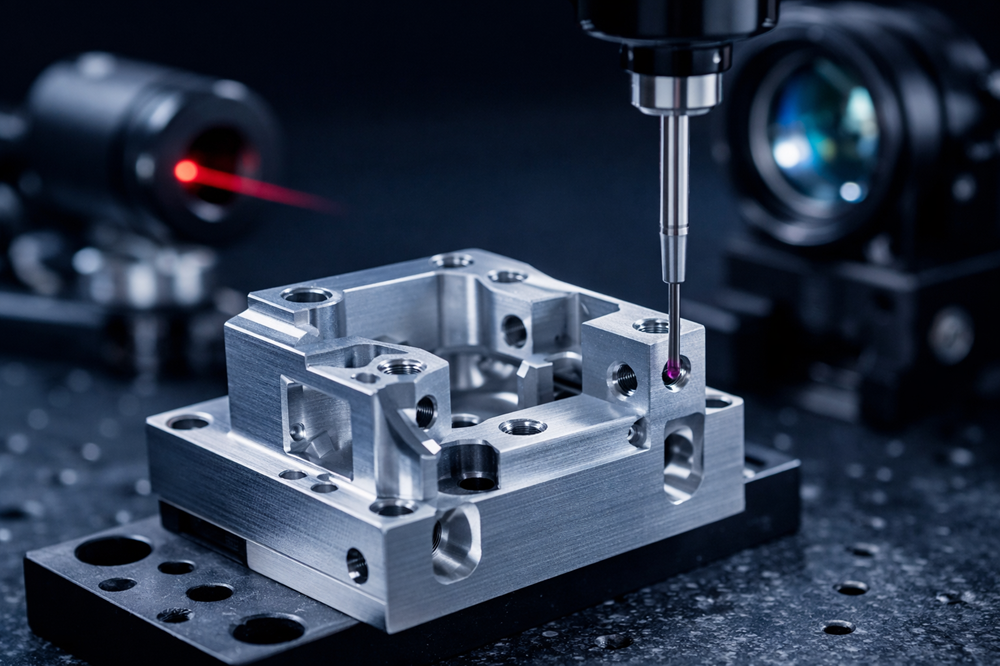
Many CNC parts pass inspection but deform once clamped or fastened.
We account for:
Clamping distortion during machining
Assembly preload paths
Real mounting conditions
For critical parts, we apply free-state or simulated-state machining to avoid elastic spring-back after assembly.
4. Thermal Behavior Consideration
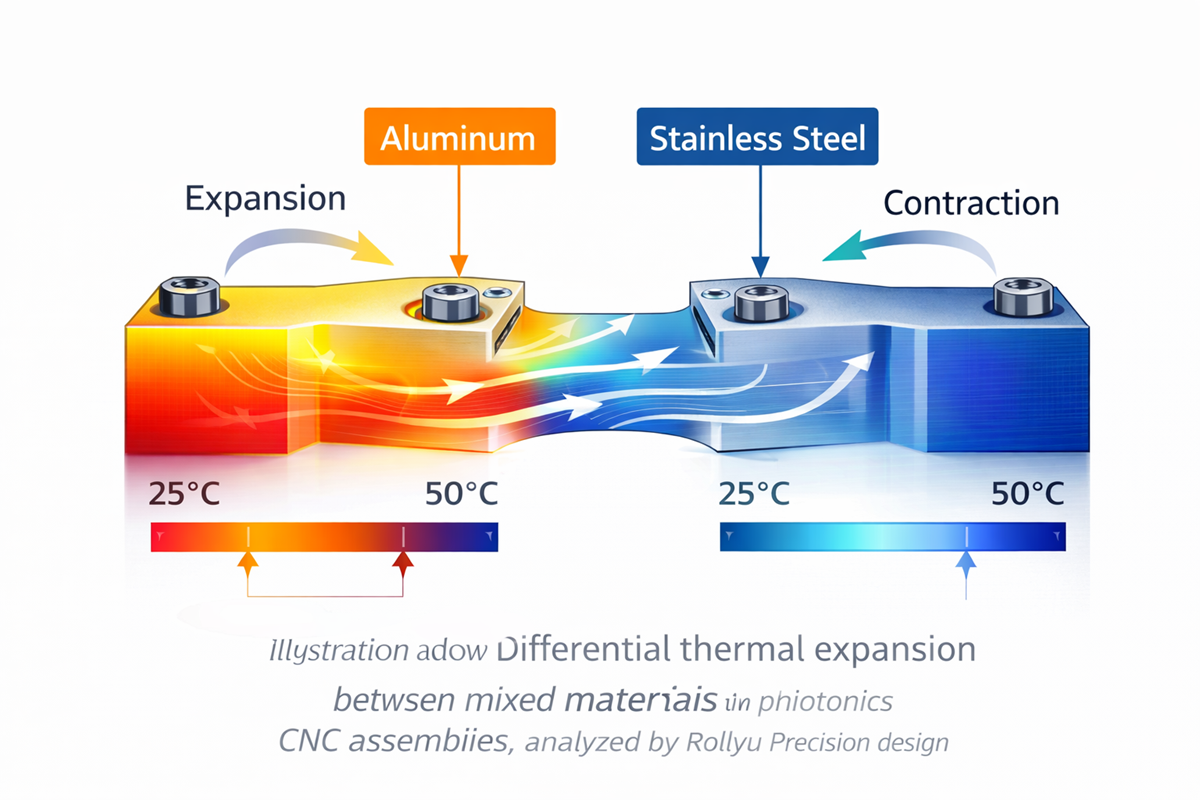
Photonics systems rarely operate at inspection conditions.
We help customers evaluate:
Material selection for thermal stability
Mixed-material assemblies
Thermal cycling risk
Because thermal hysteresis can undo perfect alignment.
Typical Photonics Components We Machine
Optical benches and baseplates
Laser housings and enclosures
Kinematic mounts and brackets
Alignment frames and sub-assemblies
Custom opto-mechanical structures
Materials commonly include:
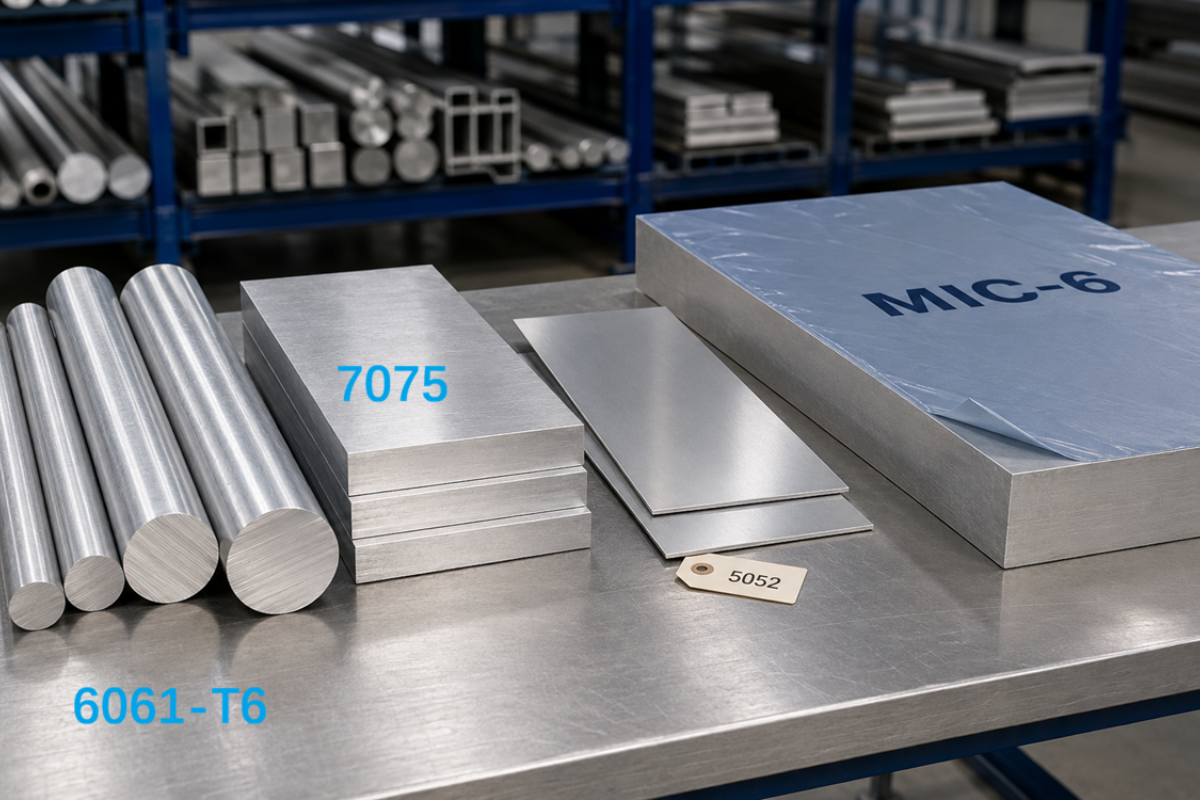
Aluminum 6061 / 7075
Stainless steel 304 / 316
Titanium alloys (on request)
Quality Control: What We Measure—and What We Question
We use CMM inspection to verify geometry, flatness, and positional accuracy.
But we do not stop there.
We actively question:
Where stress is stored after assembly
Which interfaces control alignment
What changes after thermal cycling
Because CMM reports confirm dimensions—not system stability.
When Customers Typically Contact Us
Customers usually reach out when:
Optical alignment drifts after assembly
Prototypes pass inspection but fail at scale
Systems lose stability after shipping or thermal cycling
Multiple suppliers “meet spec” but performance varies
In most cases, the issue is not tolerance—it is manufacturing behavior.
Our Role in Your Photonics Project
We are not just a machining vendor.
We act as a manufacturing partner who helps:
Identify stability risks early
Challenge assumptions before design freeze
Reduce late-stage surprises
Especially for photonics hardware where mistakes are expensive and often irreversible.
Let’s Talk About Stability—Before It Becomes a Problem
If your photonics system requires:
Long-term alignment stability
Predictable behavior after assembly
Manufacturing that supports optical performance
We are happy to review your design or discuss your application.