Nov. 25, 2025
Tolerance Capabilities at Rollyu Precision
Micron-Level Precision. Guaranteed Repeatability.
Tolerance capabilities in manufacturing, like ±0.005 mm, refer to the permissible variation in a manufactured part's dimensions. This indicates the maximum amount a feature can deviate from its intended design value and still be considered acceptable.
At Rollyu Precision, we understand that in high-performance industries, tolerances aren’t just numbers — they define functionality, reliability, and safety. That’s why we specialize in tight-tolerance machining, offering dimensional precision down to ±0.005 mm (±5 microns) across a range of materials and part geometries.
What are tolerances?
Controlling Variation to Ensure Fit, Function, and Performance
In manufacturing, a tolerance refers to the permissible limit or limits of variation in a physical dimension or measured value of a part. It defines how much a feature—such as a hole diameter, slot width, or overall length—can deviate from its nominal (theoretical) dimension and still be considered acceptable.
For example, a shaft specified as 10.00 mm ±0.01 mm must fall between 9.99 mm and 10.01 mm to pass inspection.
Why Tolerances Matter
Ensuring Functionality, Compatibility, and Manufacturability
Tolerances are essential to modern manufacturing because no production process is perfect—even the most advanced CNC machine introduces slight variations. Tolerances define the acceptable range of deviation from the nominal dimension, helping engineers and manufacturers ensure that parts perform reliably in real-world applications.
Tolerances are critical to:
Interchangeability: Ensuring that parts from different production runs or suppliers fit and function correctly
Assembly Compatibility: Avoiding interference or looseness between mating parts
Functional Performance: Guaranteeing proper motion, sealing, alignment, or stress distribution
Quality Control: Defining measurable criteria for acceptance or rejection
Cost Optimization: Balancing manufacturing difficulty with design intent—tighter tolerances require more precision, tooling, and inspection, increasing cost
Types of Tolerances
Dimensional Tolerances: Applied to linear dimensions (e.g., ±0.01 mm)
Geometric Tolerances (GD&T): Control form, orientation, position, and runout of features (e.g., flatness, concentricity, perpendicularity)
Limit Dimensions: Instead of ± variation, some drawings show upper and lower bounds directly (e.g., 19.95 / 20.05 mm)
Tolerance Example in Practice
If a medical device housing requires a sliding fit for an internal sensor module, the tolerance of both the slot width and sensor body must be tightly controlled to avoid binding or rattling. Even a 0.02 mm deviation may affect calibration or safety.
At Rollyu Precision, we work with customer-defined tolerances and offer machining capabilities down to ±0.005 mm, ensuring that every component we produce meets the required performance criteria—consistently and reliably.
How are tolerances expressed?
Defining Acceptable Variation for Precision Manufacturing
Tolerances are the allowable deviations from a nominal (target) dimension and are typically expressed as either a ± value or limit dimensions. They provide a precise, measurable range within which a manufactured part is considered acceptable.
Tolerances are typically expressed as a range, such as ±0.005 mm. This means that the dimension can be 0.005 mm smaller or larger than the specified value and still be considered within tolerance.
1. Plus/Minus Tolerances (±)
This is the most common format and is used when the acceptable variation is equal in both directions.
Example:
Nominal Dimension: 10.000 mm
Tolerance: ±0.005 mm
Acceptable Range: 9.995 mm to 10.005 mm
This means the final measurement can be up to 0.005 mm larger or smaller than the nominal value.
2. Limit Dimensions
Limit dimensions define the upper and lower acceptable values directly, without using a ± symbol.
Example:
Upper Limit: 10.005 mm
Lower Limit: 9.995 mm
This expresses the same tolerance range as ±0.005 mm, but makes the boundaries explicitly clear.
3. Asymmetric Tolerances
Sometimes, tighter control is needed in one direction (e.g., a hole cannot be too small but may be slightly oversized). These are expressed with unequal upper and lower deviations.
Example:
Nominal Dimension: 10.000 mm
Tolerance: +0.010 / –0.000 mm
Acceptable Range: 10.000 mm to 10.010 mm
This ensures the part never falls below 10.000 mm.
4. Geometric Tolerances (GD&T)
Beyond linear dimensions, tolerances may control shape, orientation, or position using Geometric Dimensioning and Tolerancing (GD&T) symbols. Examples include:
Flatness: ≤ 0.01 mm
Position: true position within a 0.02 mm diameter zone
Concentricity, Perpendicularity, Runout, etc.
These are critical in assemblies where precise relationships between features are required.
Example:
If a part's intended dimension is 10 mm and the tolerance is ±0.005 mm, the acceptable range is 9.995 mm to 10.005 mm.
Visual Example
Type | Format | Interprets As |
± Tolerance | 10.000 mm ±0.005 mm | 9.995 mm to 10.005 mm |
Limit Dimensions | 9.995 mm / 10.005 mm | Explicit upper and lower bounds |
Asymmetric Tolerance | 10.000 mm +0.010 / –0.000 | 10.000 mm to 10.010 mm (no undersize) |
At Rollyu Precision, we work with all standard tolerance formats and apply them using advanced CAD/CAM software and inspection protocols. Whether you're specifying hole fits, angular alignment, or surface profiles, we manufacture to your exact specifications—clearly, consistently, and accurately.
Factors Affecting Tolerances
What Determines How Tight a Tolerance Can or Should Be?
Setting the right tolerance is a balance between functionality, manufacturability, and cost. While tighter tolerances improve precision and fit, they also increase complexity, lead time, and inspection requirements. Several technical and practical factors influence how tight a tolerance can be realistically achieved.
Tolerances are influenced by various factors, including the manufacturing process, the material being used, and the complexity of the part.
Tolerances, in various contexts, are affected by a range of factors. In manufacturing, these can include material properties, manufacturing processes, and environmental conditions. In biology, tolerance refers to an organism's ability to survive under specific environmental conditions, and this range can be influenced by time, place, situation, and culture. In drug use, tolerance is the body's adaptation to repeated exposure, leading to a need for higher doses.
1. Material Type
Different materials respond differently to machining forces and thermal conditions.
Hard metals (e.g., stainless steel, titanium): Support tighter tolerances due to their stability.
Soft metals or plastics (e.g., aluminum, PEEK): More prone to warping, deformation, or thermal expansion, which may limit how tight the tolerance can be held.
2. Part Geometry
The complexity and size of a part affect tolerance feasibility.
Simple geometries are easier to hold to tight specs.
Thin walls, deep pockets, or long unsupported features are more difficult to machine without deflection or vibration.
Symmetry and rigidity improve machinability and dimensional stability.
3. Machining Process
Tolerance capability varies significantly by process:
3-axis machining: Best for flat, planar features (±0.01–0.005 mm typical).
5-axis machining or grinding: Ideal for complex, tight-tolerance parts.
EDM: Enables extremely fine tolerances (±0.003 mm or better).
Sheet metal fabrication: Typically looser (±0.1 mm or more), depending on bending, welding, and material springback.
4. Thermal Expansion and Environmental Conditions
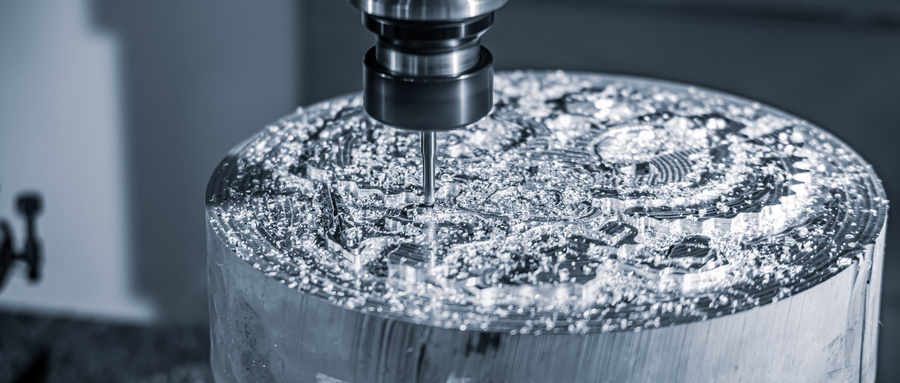
Machining heat can cause parts to expand during production. Once cooled, shrinkage may bring dimensions out of spec.
Room temperature control is critical when machining and measuring tight-tolerance components.
Some materials (like plastics) have high coefficients of thermal expansion, which must be considered in both design and inspection.
5. Tooling and Fixturing
Tool wear and incorrect tool geometry can cause deviation from nominal dimensions.
High-quality fixturing ensures part stability during cutting, reducing the chance of movement that affects precision.
Tool deflection becomes an issue on long-reach or high-speed machining jobs.
6. Inspection Capability
You can only reliably hold tolerances that you can measure.
CMMs (Coordinate Measuring Machines), optical comparators, and laser measurement systems are required for sub-±0.01 mm tolerances.
Manual gauges are not suitable for ultra-tight precision.
Proper calibration and environmental controls (e.g., temperature, vibration) are essential.

7. Cost vs. Functionality
Tighter tolerances increase machining time, scrap risk, inspection effort, and price.
Always match the tolerance to the functional need—not tighter than necessary.
Collaborate with the manufacturer (like Rollyu Precision) during DFM (Design for Manufacturability) reviews to optimize tolerances for both performance and production efficiency.
At Rollyu Precision, we consider all these factors when planning a job. Whether your component needs ±0.1 mm for a bracket or ±0.005 mm for a semiconductor fixture, we apply the right process controls, tooling, and inspection protocols to ensure your tolerances are not just met — they’re repeatable.
Previous: Why choose Rollyu Precision