Feb. 05, 2026
Surface Finish Standards in Sheet Metal Fabrication
In precision sheet metal fabrication, surface finish is far more than just appearance. The level of smoothness, texture, and coating quality achieved on fabricated parts plays a direct role in their functionality, durability, and long-term reliability. In many industries, surface finish standards are strictly defined because they directly influence how well parts fit, assemble, resist corrosion, bond, or meet downstream processing requirements.
At Rollyu Precision, surface finish control is fully integrated into our production and quality systems, ensuring every fabricated part consistently meets both technical and cosmetic specifications.
Why Surface Finish Standards Matter
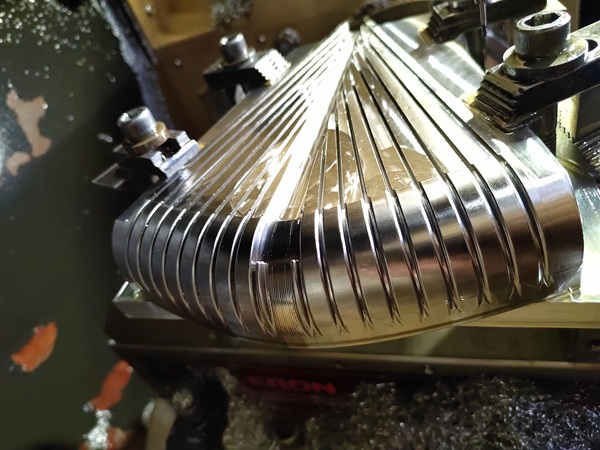
Surface finish standards exist to ensure fabricated sheet metal parts not only look correct, but also function properly throughout their service life. Surface finish directly affects:
Cosmetic Appearance
Visual aesthetics, gloss levels, color uniformity, and surface texture.
Assembly Fit
Ensures flatness, dimensional stability, and repeatable mating of components.
Corrosion Protection
Improves long-term part stability in challenging environments.
Cleanliness & Sterility
Critical for medical devices and semiconductor equipment, where contamination is unacceptable.
Coating Adhesion
Ensures uniform application and long-term durability of powder coat, plating, or anodizing.
Electrical Properties
Key for parts requiring conductivity, shielding, or insulation performance.
Friction & Wear Resistance
Essential for moving components, enclosures, or mechanisms where parts interface.
Industry-Specific Surface Finish Expectations
Surface finish standards vary based on the part’s end-use industry:
Industry | Surface Finish Focus |
Medical Devices | Smooth, non-porous, sterile surfaces; electropolishing; passivation; burr-free edges. |
Semiconductors | Ultra-clean, particle-free, low Ra (<0.2 µm); contamination-free; vacuum-compatible finishes. |
Photonics | Flawless surface flatness; no scratches; uniform anodizing for optical consistency. |
Aerospace | Corrosion protection; anodized or plated; high fatigue resistance; controlled edge finishes. |
Telecom & Electronics | Conductive coatings; EMI shielding; cosmetic uniformity; solderability. |
Automation & Robotics | Durable coatings; wear resistance; clean aesthetics; functional edges. |
Common Surface Finishing Processes in Sheet Metal Fabrication
Several finishing processes are used to meet specific functional and visual standards:
1️ Bead Blasting
Creates a matte, uniform surface finish, removing minor imperfections and tool marks. Used extensively for pre-coating preparation or cosmetic control.
2️ Brushing
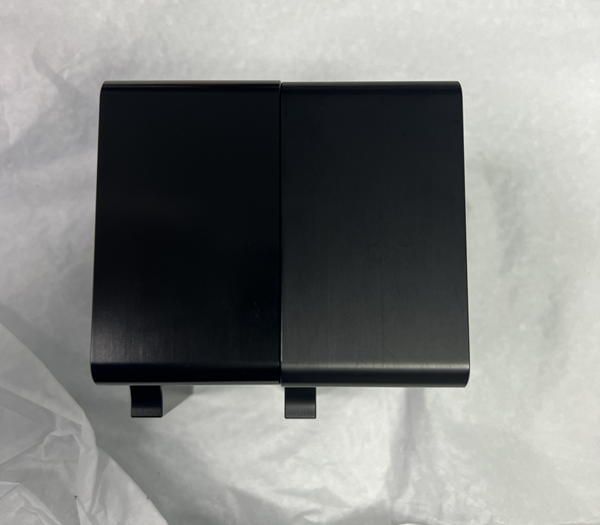
Applies controlled grain patterns for aesthetic appeal or functional alignment with housing assemblies.
3️ Anodizing
Forms a hard, corrosion-resistant oxide layer with optional color finishes. Widely used for aluminum parts in medical, aerospace, and optical equipment.
4️ Powder Coating
Applies a durable, uniform colored finish with excellent mechanical protection, used extensively across automation, robotics, and enclosure industries.
5️ Plating (Zinc, Nickel, Gold, Silver)
Enhances corrosion protection, solderability, and electrical performance for electronics, telecommunications, and cleanroom assemblies.
6️ Electropolishing
Removes microscopic peaks from metal surfaces, producing extremely smooth finishes critical for medical, semiconductor, and high-purity applications.
7️ Passivation
Chemically removes surface iron to improve corrosion resistance on stainless steel, while preserving appearance.
8️ Deburring & Edge Treatment
Removes sharp edges and burrs after cutting and forming to improve part safety, coating adhesion, and assembly performance.
Typical Surface Roughness Standards
Surface finish is commonly quantified by surface roughness (Ra), measured in micrometers (µm):
Process | Typical Surface Roughness (Ra µm) |
Laser Cutting | 3.2 – 12.5 µm |
Waterjet Cutting | 1.6 – 6.3 µm |
CNC Shearing | 0.8 – 6.3 µm |
Bending/Forming | 0.8 – 3.2 µm |
Grinding | 0.4 – 1.6 µm |
Bead Blasting | 1.6 – 3.2 µm |
Brushing | 0.8 – 1.6 µm |
Anodizing/Plating | < 0.8 µm |
Electropolishing | 0.1 – 0.4 µm |
Note: Specific customer requirements may exceed these general ranges depending on application.
International Surface Finish Standards & Compliance
Rollyu Precision operates under fully traceable quality systems aligned with global standards:
ISO 1302 (Surface finish symbols for drawings)
ISO 4287 / ISO 4288 (Surface texture measurement methods)
ASME B46.1 (US surface texture standards)
ISO 9001 / ISO 13485 (Quality management system certifications)
AMS / MIL-STD Specifications (Aerospace and defense finish standards)
FDA / GMP Requirements (Medical device cleanliness and finish standards)
Surface Finish Inspection & Quality Control at Rollyu Precision
Every surface finish is inspected and documented to ensure compliance:
Profilometer Testing: Ra surface roughness verification
Visual Inspection: Under controlled lighting for cosmetic defects
Microscopic Inspection: For micro-defects, pitting, or embedded contaminants
Coating Thickness Testing: Non-destructive verification of plating and powder coat thickness
Cleanliness Testing: Wipe tests and particulate analysis for medical/semiconductor parts
Adhesion Testing: Cross-hatch and pull-off tests for coatings and platings
Conclusion
Surface finish standards are not an afterthought—they are an essential part of precision sheet metal fabrication. By controlling surface quality at every step, Rollyu Precision ensures our fabricated parts meet both functional performance and world-class cosmetic standards, fully compliant with customer requirements across the most demanding industries.
Have questions about surface finish requirements, Ra targets, or finishing process selection for your sheet metal parts?
Contact our engineering team at: hinyi@rymachining.com
Previous: Full traceability with ISO certification