Jan. 23, 2026
Design for Manufacturability (DFM) for Sheet Metal Fabrication: How to Engineer Cost-Effective, High-Quality Parts
Design for Manufacturability (DFM) in sheet metal fabrication is a crucial process that optimizes the design of sheet metal parts for efficient and cost-effective production. It aims to bridge the gap between design concepts and real-world manufacturing, resulting in higher quality parts and shorter lead times.
In precision sheet metal fabrication, brilliant designs are only as good as their manufacturability. Many companies design beautiful 3D models that are difficult — or even impossible — to produce efficiently on real-world fabrication floors. This is where Design for Manufacturability (DFM) becomes a critical discipline.
At Rollyu Precision, we work closely with our customers to optimize part designs early in development, ensuring that every bend, cut, hole, and weld can be fabricated to spec, on time, and within budget — without sacrificing functional performance.
In this article, we’ll explore how DFM principles apply specifically to sheet metal fabrication, and how proper DFM can lower costs, improve yields, reduce lead times, and minimize production risk.
Design for Manufacturability (DFM) for Sheet Metal Fabrication: Turning Designs into Scalable, Efficient Production
Design for Manufacturability (DFM) in sheet metal fabrication is not just an engineering concept—it is a critical process that transforms complex part designs into practical, repeatable, and cost-effective production solutions. In today’s precision manufacturing environment, DFM helps close the gap between theoretical CAD models and real-world manufacturing capabilities, resulting in more stable production processes, higher-quality components, and shorter lead times.
In precision sheet metal fabrication, outstanding designs mean very little if they cannot be produced efficiently and consistently. Many companies invest heavily in sophisticated 3D models that, when transferred to the shop floor, present unforeseen manufacturing challenges: unworkable bend radii, impossible geometries, excessive secondary operations, or costly custom tooling. This is where Design for Manufacturability becomes essential.
At Rollyu Precision, we partner with our customers from the earliest stages of product development. Our DFM approach focuses on engineering each design for real-world fabrication: ensuring that every bend, cut, hole, weld, and finish is optimized for manufacturability, performance, and scalability — all while controlling cost and protecting functional integrity.
In this article, we will explore how DFM directly applies to sheet metal fabrication, and how an effective DFM process helps to reduce manufacturing costs, improve production yields, minimize risks, and accelerate delivery schedules — especially for industries that demand precision, such as medical devices, semiconductor equipment, robotics, telecommunications, aerospace, and photonics.
The Role of DFM in Sheet Metal Fabrication
Sheet metal fabrication involves a highly interconnected set of processes:
Laser cutting
CNC punching
Bending & forming
Welding
Fastening
Finishing (anodizing, powder coating, plating, bead blasting)
Each of these stages comes with unique constraints. Even minor design oversights can lead to:
Excessive setup and fixturing costs
Deformation during bending
Complex weld assemblies
Higher rejection rates during inspection
Delayed lead times
By applying DFM early, design teams can avoid these pitfalls — engineering parts that are straightforward to fabricate, assemble, and finish, while still meeting functional and cosmetic requirements.
Core DFM Guidelines for Sheet Metal Fabrication
1️⃣ Material Selection: Use Industry-Standard Sheet Stock
Choose readily available gauges: 0.8mm, 1.0mm, 1.5mm, 2.0mm, 3.0mm, etc.
Match materials to function and finish:
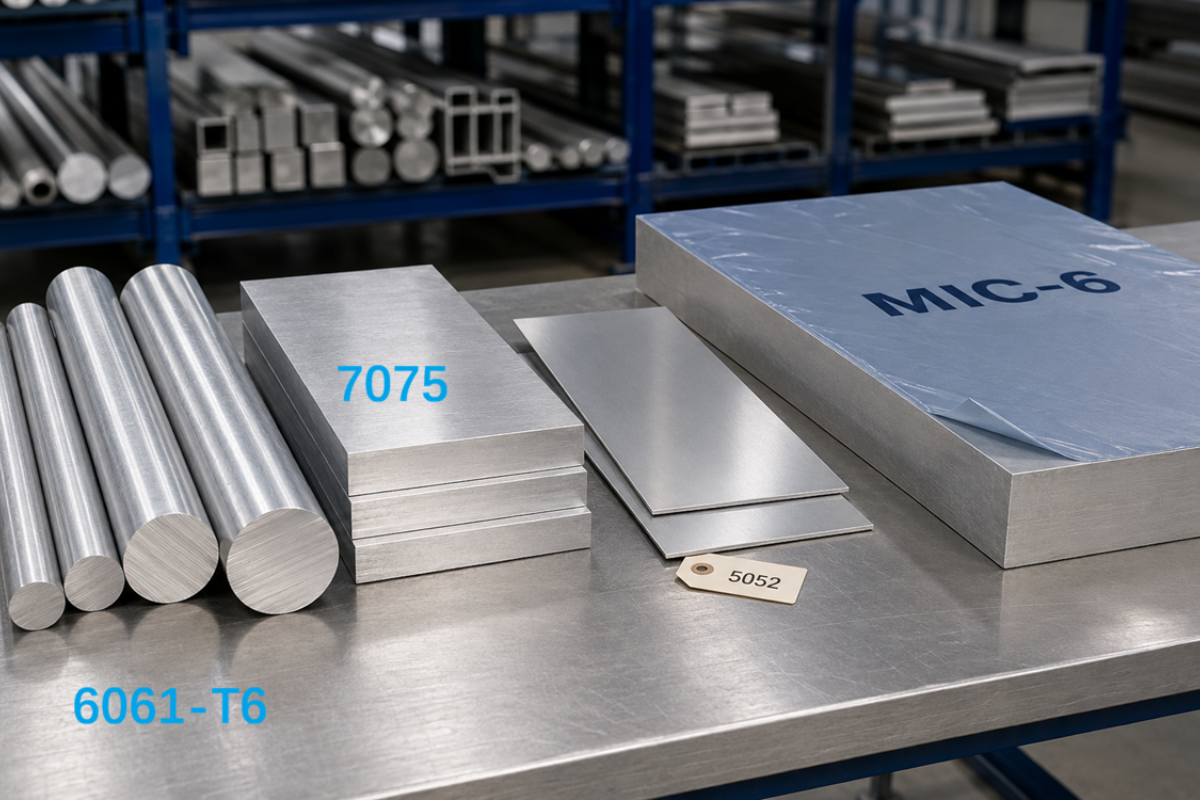
Aluminum 5052, 6061 (excellent for forming, anodizing)
Stainless Steel 304, 316L (corrosion resistance, medical grade)
Cold Rolled Steel (cost-effective for powder coated parts)
Copper, Brass, Titanium (specialized conductivity or biocompatibility)
Avoid over-specifying exotic alloys unless truly required.